Using Infra-Red Cameras To Find Hidden Moisture Issues
Date Published: May 23, 2019
Detecting moisture in a home with the use of infra-red cameras is smart science! This noninvasive technique is an extremely affordable way to find out what is going on behind the scenes in your home.
With the aid of a special handheld device, your inspector can assess potential problem areas during a pre-listing or pre-purchase inspection. And the results are immediate!
How is this done? Using Infra-Red Cameras To Find Hidden Moisture.
How do infra-red cameras work? IR is actually Infra-red radiation, which can identify infra-red heat, turning it into an electronic signal, and from there, to a visible image on the inspector’s scanner. The image on an infra-red camera will display a range of temperatures on the surface it is pointed at.
From this image, you can begin to make some assumptions. When looking for hidden moisture, an inspector will look for temperature anomalies. When moisture sits behind a wall or tile, it tends to be colder than the area around it. This is because water changes temperature much slower than drywall or other building materials.
When scanning a wall with your infra-red camera, if you see a large, colder area, an inspector may take that information and investigate further or use other moisture meters to confirm.
Typically, an inspector will also scan areas where water supply piping is present. Leaks often occur at plumbing fittings and water can seep lower behind cabinets and drywall. IR scans can uncover these areas if they have hidden moisture present.
A real world example.
Recently, one of our inspectors found a hidden roof leak while using an infra-red camera. When scanning the ceiling of an upstairs bathroom, a temperature anomaly was found.
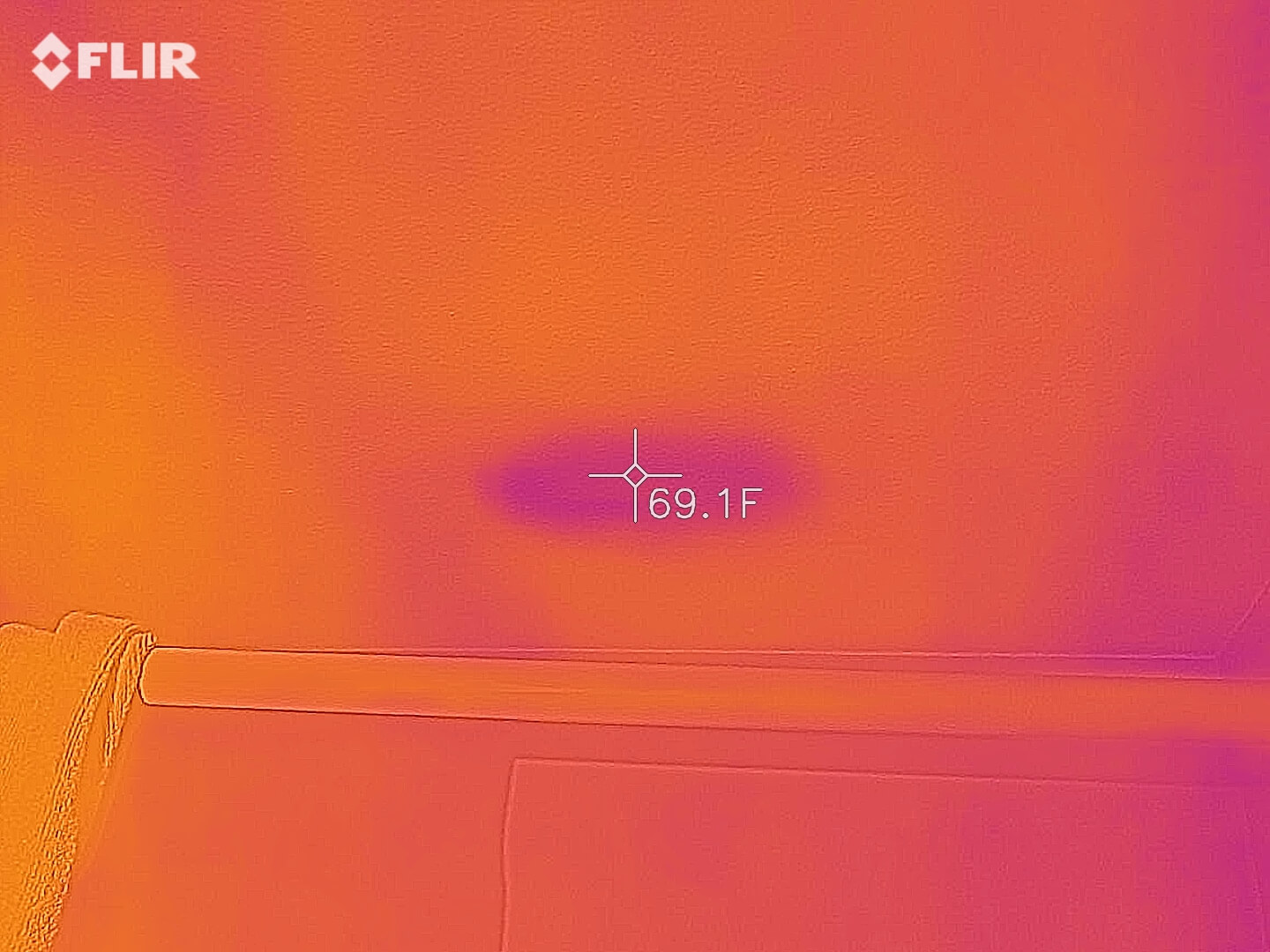
Small colder circle on the ceiling drywall of a home. This indicates there may be moisture in this area.
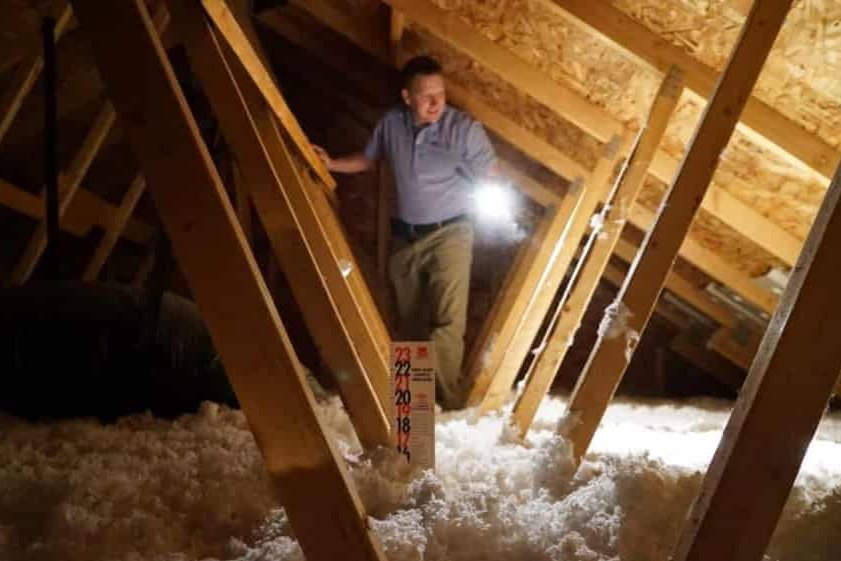
Upon further inspection, the inspector found that the area in the attic was in fact wet. Above this area, an attic fan was present. The cap on the attic fan was not properly diverting moisture away from the opening which was causing a leak in the attic.
The issue appeared to be newer as the drywall in this area was not yet stained. So, a future problem was avoided by using infra-red cameras to find hidden moisture.
Our Infra-Red Scanning Add-On Service
Since moisture can lead inevitably to mold growth, and potential health or respiratory conditions, scheduling an IR test is a simple preventative measure to take. Having the ability to see invading moisture, avoids potential issues to the structural integrity of the home as well. Infrared technology can contribute to a more comfortable home, and a healthier home.
All of our inspectors are trained to use infrared cameras in this fashion. We use professional FLIR cameras with high resolution for accurate results.
Easy, affordable and effective, consider adding an infra-red scan to your next home inspection. As one of our most cost-effective add-on services, infra-red scans can help mitigate any future surprises.

Related Articles
If you enjoyed this article, you may be interested in some of our others.

![Is A Home Inspection Worth It? [A Case Study]](jpg/is-a-home-inspection-worth-it-500x383.jpg)